

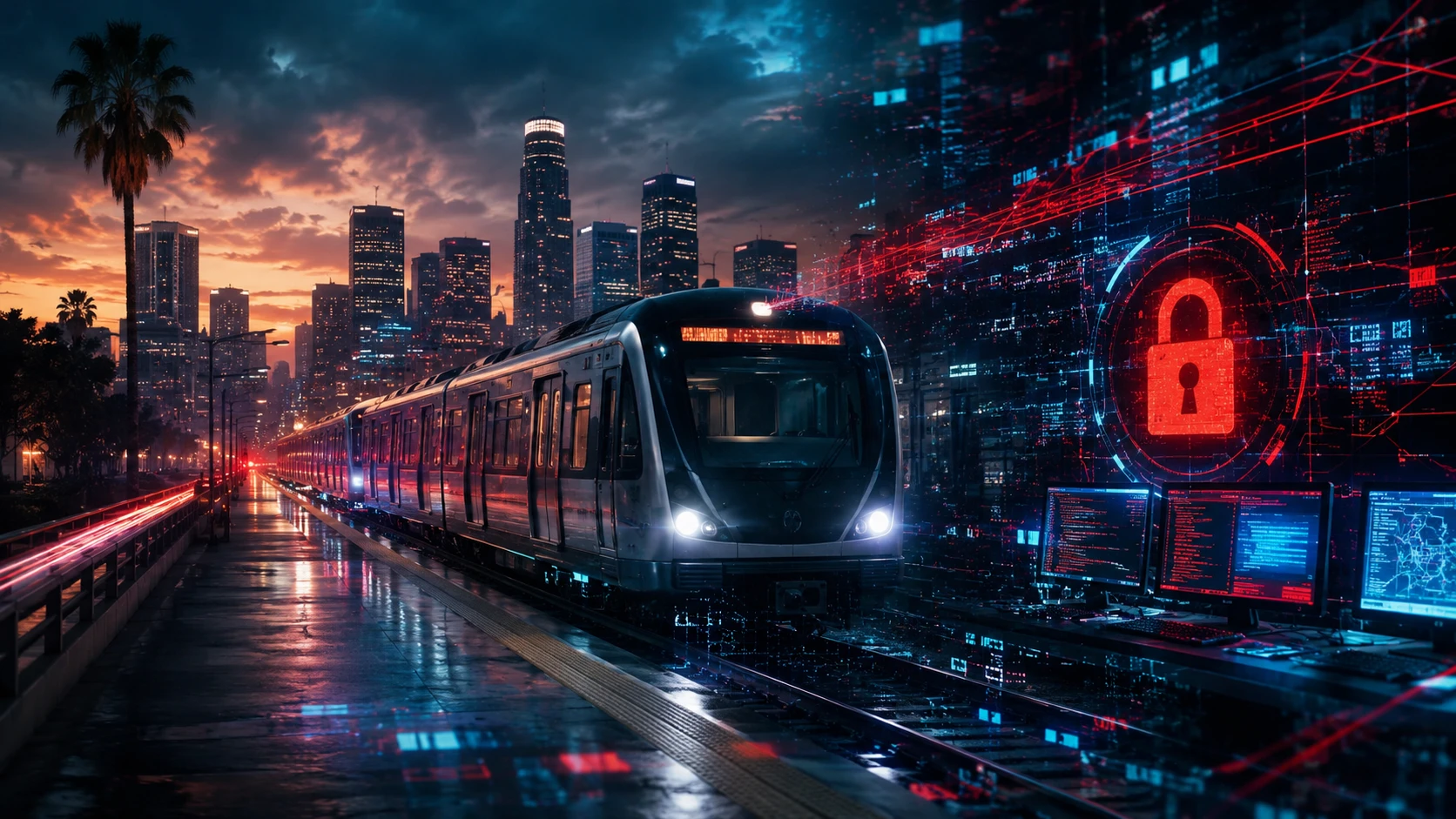
The LA Metro cyberattack is not just another breach story buried in the endless stream of security headlines. It is a warning shot aimed at every city that now depends on connected infrastructure, digital payment systems, cloud-hosted backups, vendor portals, and real-time service platforms to keep daily life moving. When a transit network becomes a cyber target, the impact is bigger than stolen files or locked computers because the public starts asking whether the systems they rely on every morning are truly resilient. The reported intrusion into the Los Angeles County Metropolitan Transportation Authority shows how a cyber incident can touch everything from internal communications to passenger-facing services, even when buses and trains continue operating. For a modern city, that distinction matters because keeping vehicles moving is important, but keeping trust intact is just as critical.
The best SEO keyword for this story is LA Metro cyberattack because it captures the event, the location, and the cybersecurity angle in one clear phrase. It also connects naturally with related search intent around critical infrastructure security, transit system breach, Iran-linked hackers, and public transportation cybersecurity. This kind of keyword works well for CyberVortixel because it is specific enough to compete around a real incident, but broad enough to build authority in the larger conversation about how digital crime is moving into public infrastructure. The phrase should not be treated like a forced SEO label, though, because the real strength of the topic is the story behind it. At its core, this is a story about how cyber conflict no longer stays inside government networks, defense contractors, or corporate databases, but spills into the systems that ordinary people use to get to work, school, hospitals, and airports.
Why the LA Metro Cyberattack Feels Different
Most people think about cyberattacks as something that happens far away, inside a bank server, a corporate email account, or a government agency dashboard that the public never sees. The LA Metro cyberattack feels different because public transportation sits close to everyday life, and that closeness makes the risk easier to understand. A metro system is not just a website or an office network; it is a living urban machine made of schedules, signals, payment tools, maintenance records, employee accounts, cameras, vendor systems, and passenger information. Even if the core transport operation remains active, the digital layer around it can still be shaken in ways that affect confidence, convenience, and coordination. That is why this incident lands with more weight than a typical data breach, because it reminds cities that infrastructure is now software, and software is now a battlefield.
The reported breach involved a large volume of stolen data and forced parts of the transit agency’s network offline, which is exactly the kind of scenario that security teams fear in infrastructure environments. The public might only notice broken screens, delayed digital updates, payment problems, or temporary service limitations, but behind the scenes the organization has to answer much harder questions. Which systems were touched, which credentials were exposed, which backups can be trusted, which vendors had access, and which internal records may now be outside the agency’s control. Those questions create a long recovery curve that can continue for months after the first public statement. In that sense, the LA Metro cyberattack is not a single event but a stress test of technical resilience, public communication, legal exposure, and operational discipline.
A Transit Breach in the Age of Digital Pressure
Public transportation agencies have become attractive targets because they operate in a complicated middle zone between government, public service, and enterprise technology. They must stay available, they hold sensitive information, they manage public-facing platforms, and they often depend on older systems that were never designed for today’s threat landscape. Unlike a private company that can pause a product launch or shut down a customer portal for a controlled recovery, a transit agency has to keep serving millions of people while investigators are still figuring out what happened. That pressure creates an ideal environment for attackers who want visibility, disruption, leverage, or political messaging. The LA Metro cyberattack shows why attackers do not need to derail a train to create fear; they only need to prove that the digital foundation around the system can be reached.
The bigger trend is that digital crime is blending with geopolitics in ways that make attribution, response, and prevention more complicated. When a threat actor is linked to a state, a political cause, or a regional conflict, the attack may not follow the usual profit logic of ransomware. The goal may be embarrassment, disruption, pressure, propaganda, data theft, or a combination of all of them. That makes defense harder because organizations cannot simply prepare for one kind of attacker or one kind of outcome. A city transit agency now has to think like a public utility, an enterprise cloud customer, a data custodian, a crisis communications team, and a national security stakeholder all at once.
What Attackers Gain From Hitting Public Transit
At first glance, a transit agency might seem less valuable than a bank, a hospital, or a major software company, but that assumption misses the point. Public transit networks are full of operational data, employee records, internal emails, vendor contracts, system diagrams, backup files, credentials, and administrative workflows that can be useful to attackers. Even when passenger payment data is separated from other systems, attackers can still use stolen internal information for extortion, follow-on phishing, vendor impersonation, or future intrusion attempts. The value is not always immediate financial gain; sometimes the value is strategic visibility into how a public agency works. In the case of the LA Metro cyberattack, the symbolic value is also massive because Los Angeles is one of the most recognizable cities in the world, and its transit system is a high-profile public target.
Attackers also gain attention by striking systems that citizens recognize. A breach at an unknown backend service provider may be technically serious, but it rarely travels through public conversation with the same force as an incident involving trains, buses, or city infrastructure. This attention economy matters because modern threat groups often perform for multiple audiences at once. They want victims to feel pressure, defenders to feel uncertainty, supporters to see strength, and rivals to see capability. A transit breach can become a message that says the attacker can reach beyond screens and into the rhythm of a city. That psychological layer is one reason critical infrastructure security has become such a central concern for cybersecurity teams around the world.
The Data Problem Behind the Disruption
One of the most serious parts of any infrastructure breach is not always the immediate outage, but the data left behind after the attacker leaves. Stolen emails can reveal internal debates, emergency procedures, vendor relationships, access patterns, staff names, technical dependencies, and old attachments that were never meant to become public. Backup files can be even more sensitive because they may contain historical snapshots of systems, databases, configurations, and operational materials. If a threat actor obtains enough internal context, the breach can become a blueprint for future attacks instead of just evidence of a past one. That is why data security must be treated as a core part of transit resilience, not as a side issue handled after operations are restored.
The LA Metro cyberattack also highlights the uncomfortable reality that organizations often collect and store more data than they actively protect. Data piles up through routine business, old projects, archived inboxes, shared drives, backup schedules, vendor migrations, and legacy retention habits that nobody has reviewed in years. When attackers break in, those forgotten folders can become the most damaging part of the incident. Security teams can patch servers and reset passwords, but they cannot easily pull exposed files back from the internet once they are copied out. This is why modern breach readiness has to include data minimization, retention cleanup, encryption discipline, privileged access reviews, and realistic backup segmentation.
How Geopolitics Changes the Cybersecurity Game
When a cyberattack is allegedly connected to a foreign-aligned group, the conversation shifts from ordinary cybersecurity to strategic risk. The victim is no longer just defending against criminals looking for money; it may be dealing with actors who want disruption, visibility, revenge, or influence. That changes the expected playbook because a politically motivated group may not care about staying quiet for long-term financial gain. It may want to leave a message, leak files, post proof, claim responsibility, or exaggerate the scope of the damage to shape public perception. The LA Metro cyberattack sits inside that broader pattern, where infrastructure becomes both a technical target and a political stage.
This does not mean every public agency should panic or treat every suspicious login as an international incident. It means agencies need a more mature model for risk that includes both criminal and geopolitical possibilities. Threat intelligence should not live in a separate report that nobody reads; it needs to influence patch priorities, tabletop exercises, vendor reviews, executive briefings, and crisis messaging. Transportation agencies, city departments, hospitals, utilities, and universities are all part of the same expanded attack surface when tensions rise. In that environment, the smartest defenders are the ones who prepare before their name becomes the next headline in the cybersecurity category.
Why Transit Systems Are Hard to Secure
Securing a transit agency is hard because the technology environment is rarely clean, simple, or fully modern. There are office networks, control systems, maintenance platforms, ticketing tools, passenger apps, cloud services, contractors, legacy databases, surveillance systems, field devices, and third-party integrations that have grown over many years. Some systems need high availability, some are difficult to patch, and some may be managed by vendors under contracts written before current threats were common. Add budget constraints, public accountability, labor needs, procurement rules, and emergency response obligations, and the security challenge becomes deeply human as well as technical. The LA Metro cyberattack matters because it shows how attackers can exploit the messy reality of infrastructure rather than the ideal diagram shown in a boardroom.
Another issue is that transit systems must balance openness and protection every day. Passengers need easy payment options, employees need remote access, vendors need maintenance connections, public dashboards need real-time data, and city partners need coordination channels. Every convenience creates another place where identity, access, software, and monitoring need to be carefully managed. If one account is phished, one server is misconfigured, or one vendor tool is exposed, attackers may find a path deeper into the environment. That is why enterprise security principles like zero trust, network segmentation, least privilege, and continuous monitoring are no longer optional for agencies that move people through major cities.
The Real Impact Is Bigger Than Service Outages
When people hear that buses and trains kept running, they may assume the damage was limited, but that view is too narrow. A cyberattack can harm an organization even when the main service continues because the hidden cost appears in recovery work, forensic investigations, public communication, legal review, employee disruption, vendor coordination, and long-term security upgrades. Staff may lose access to normal tools, passengers may struggle with digital services, and leaders may be forced to make decisions with incomplete information. The public may never see the most stressful parts of recovery, but those internal pressures can be intense. In a large agency, restoring confidence can be just as difficult as restoring a server.
The LA Metro cyberattack also shows why incident response needs to be measured by more than uptime. A transit agency can pass the basic operational test by keeping vehicles moving while still facing a major data, trust, and governance challenge. If sensitive files were stolen, the agency must understand what was exposed, who may be affected, and how the data could be misused later. If backups were accessed, the agency must validate whether recovery systems are clean and reliable. If attacker claims include destruction or deeper access, investigators must separate confirmed facts from noise while communicating clearly enough to avoid public confusion.
A Wake-Up Call for Cloud and Backup Strategy
Modern infrastructure organizations increasingly depend on cloud platforms, hybrid networks, managed service providers, and backup environments that stretch beyond one physical location. This can improve resilience when designed well, but it can also increase risk when access controls, logging, encryption, and segmentation are weak. Attackers love backup data because it can contain the keys to understanding an organization’s past and present systems. They also target cloud identity because one stolen credential can sometimes open more doors than a traditional malware infection. That is why cloud security and backup governance should be treated as front-line defenses, especially for public agencies with large operational footprints.
A strong backup strategy is not just about having copies of data. It is about keeping backups isolated, encrypted, tested, monitored, and protected from the same identities used in the production network. If attackers can access backups through ordinary administrative credentials, the backup system becomes part of the breach instead of the escape route. Agencies should also practice recovery under realistic conditions, including scenarios where some systems are offline, some credentials are untrusted, and some data may have been altered. The LA Metro cyberattack is a reminder that backup security is not a boring IT chore; it is the difference between a controlled recovery and a long, uncertain rebuild.
What Cities Should Learn From the Breach
The biggest lesson for cities is that cyber resilience must be planned before a crisis, not improvised after attackers are already inside. Public agencies should know which systems are most critical, which vendors have access, which data stores contain sensitive information, and which services can be safely isolated without shutting down the entire operation. They should also have a communication plan that explains what is known, what is still under investigation, and what citizens should do next. Silence creates rumor, but overconfident statements can create bigger problems if facts change later. A mature response is honest, specific, calm, and updated as evidence improves.
Cities also need to treat cybersecurity as a shared leadership issue rather than a technical department problem. Transit executives, legal teams, communications staff, procurement officers, operations managers, and elected officials all play a role in reducing risk. Security teams can recommend controls, but leaders decide whether modernization gets funded, whether vendors are held to stronger standards, and whether old systems are replaced before they become liabilities. The LA Metro cyberattack should push city leaders to ask harder questions about what is exposed, what is outdated, and what would happen if a similar attack landed during a major event or emergency. Those questions may feel uncomfortable, but they are far cheaper than asking them for the first time during an active breach.
Practical Security Moves for Transit Agencies
Transit agencies do not need perfect security to become much harder targets, but they do need disciplined basics that are actually enforced. The first move is identity security, because attackers often enter through stolen credentials, weak authentication, exposed remote access, or poorly managed privileged accounts. Multi-factor authentication should be mandatory, but agencies also need phishing-resistant options for administrators and high-risk roles. Privileged access should be limited, monitored, and reviewed regularly instead of handed out permanently because someone needed it once during a past project. In many breaches, the difference between a contained incident and a major compromise is whether one stolen account can move freely across the environment.
The second move is segmentation, especially between business networks, operational systems, backup environments, and public-facing services. If attackers compromise an email account, they should not be able to jump easily into payment systems, control environments, backup servers, or sensitive file shares. Segmentation does not have to be glamorous to be powerful because its job is to slow attackers down and give defenders time to detect them. Agencies should also monitor unusual data movement, unexpected administrative behavior, suspicious remote logins, and access from locations or devices that do not match normal patterns. The LA Metro cyberattack reinforces the need for detection that sees not just malware, but abnormal behavior across people, systems, and data.
The third move is vendor risk management that goes beyond paperwork. Transit agencies often depend on contractors for software, hardware, ticketing, maintenance, analytics, cloud services, and support operations. Every vendor connection should have a clear owner, a clear purpose, a clear access limit, and a clear expiration or review cycle. Agencies should require security logging, incident notification timelines, vulnerability management expectations, and proof that remote access is protected. A vendor account should never become a quiet backdoor that survives for years because nobody remembers why it was created.
Key Defensive Priorities
- Identity hardening: Use phishing-resistant authentication for administrators, remove stale accounts, and review privileged access often.
- Network segmentation: Separate operational systems, office tools, backups, and public-facing platforms to reduce attacker movement.
- Backup protection: Keep recovery data isolated, encrypted, tested, and monitored for unauthorized access.
- Threat monitoring: Watch for abnormal logins, data transfers, credential abuse, and suspicious vendor activity.
- Incident rehearsals: Run realistic exercises that include legal, communications, operations, and executive teams.
These priorities may sound basic, but basic does not mean easy. Large public agencies often struggle because their technology estate has been built over decades, and security teams must protect systems they did not design, cannot quickly replace, and may not fully control. That is why leadership support matters as much as technical skill. A security roadmap needs funding, authority, timelines, and accountability, not just recommendations hidden inside an audit report. The LA Metro cyberattack should make those investments easier to justify because the cost of inaction is now visible in a way the public can understand.
The Human Side of Infrastructure Cybersecurity
Cybersecurity is often described through tools, malware names, and threat actor labels, but the human side matters just as much. A transit breach affects employees who suddenly cannot use normal systems, IT teams working long recovery hours, riders trying to understand what is safe, and leaders facing public pressure. It also affects trust between agencies and citizens because people expect infrastructure to work quietly in the background. When that trust is shaken, even small technical issues can feel bigger than they are. The LA Metro cyberattack reminds us that public-sector cybersecurity is ultimately about protecting people, routines, and confidence, not just protecting machines.
That human angle is also why communication must be clear and grounded. Agencies should avoid vague language that makes every incident sound like a minor technical issue, but they should also avoid dramatic statements before evidence is confirmed. People need practical information, such as whether services are running, whether payment tools are affected, whether personal data may be involved, and what steps they should take. Employees need separate guidance because they may face phishing attempts that use breach details to look more convincing. A good response treats the public as capable of understanding risk when information is presented honestly and without panic.
Why This Story Matters Beyond Los Angeles
The importance of the LA Metro cyberattack stretches far beyond Los Angeles because nearly every major city is moving in the same digital direction. Transit systems are adding mobile payments, real-time dashboards, cloud analytics, connected maintenance platforms, smart cameras, app-based services, and data-sharing partnerships. These tools can make transportation faster, cleaner, and more responsive, but they also create more pathways that need protection. The future of public transit is not less digital; it is more digital, more connected, and more dependent on software. That means cybersecurity must be built into modernization from the start instead of added later when the architecture is already fragile.
Other cities should study this incident as a warning, not as someone else’s problem. A breach in one transit agency can reveal tactics that attackers may reuse against others, especially if similar software, vendors, or operational habits exist across the sector. Security teams should review logs, test remote access controls, validate backups, check exposed systems, and update incident playbooks while the lesson is still fresh. Executives should ask whether their agency could continue operating if internal systems were taken offline for days or weeks. The smarter question is not whether a cyberattack will happen, but whether the organization can absorb it without losing control of operations, data, and public trust.
The Trend: Infrastructure Is the New Front Door
The broader trend is clear: attackers are increasingly interested in the systems that support daily life. Hospitals, schools, water utilities, transportation agencies, city governments, and logistics providers all sit in the zone where digital disruption can become public disruption. These organizations may not always have the security budgets of major tech companies, but they often carry higher social impact when something goes wrong. That imbalance creates an opportunity for threat actors who want maximum attention with limited effort. The LA Metro cyberattack fits this pattern because it turns a local infrastructure incident into a national and international cybersecurity conversation.
This trend also changes what counts as national resilience. In the past, infrastructure protection was often imagined in physical terms, such as fences, guards, cameras, and emergency crews. Those things still matter, but the new front door may be a stolen password, an exposed server, a vulnerable vendor tool, a misconfigured cloud account, or an employee tricked by a convincing email. Physical and digital resilience now have to work together because public services depend on both. A city can have strong physical operations and still face serious risk if the digital systems behind those operations are weak, fragmented, or poorly monitored.
Conclusion: A Cyber Alarm Cities Cannot Ignore
The LA Metro cyberattack should be treated as a serious alarm for every city, transit agency, and public-sector leader watching the future of infrastructure unfold. It shows that attackers do not have to completely stop transportation services to create disruption, extract value, generate headlines, and pressure public institutions. It also shows that data exposure, backup access, identity abuse, and public trust can be just as important as visible outages. For cybersecurity teams, the lesson is practical: harden identity, segment networks, protect backups, monitor behavior, and rehearse crisis response before an incident forces the issue. For city leaders, the lesson is strategic: cybersecurity is now part of public safety, and the agencies that understand that first will be better prepared for the next wave of digital pressure.
Los Angeles may be the name in the headline, but the warning belongs to every connected city. Public transportation is becoming smarter, faster, and more data-driven, which means it is also becoming more exposed to threat actors who understand how much society depends on uptime and trust. The future will not reward agencies that treat cyber risk as a back-office concern or a problem to solve after modernization is complete. It will reward organizations that design security into every layer of service, from employee accounts and cloud systems to passenger tools and operational recovery plans. That is the real message of the LA Metro cyberattack: modern infrastructure can only be trusted when cybersecurity moves at the same speed as the city itself.