

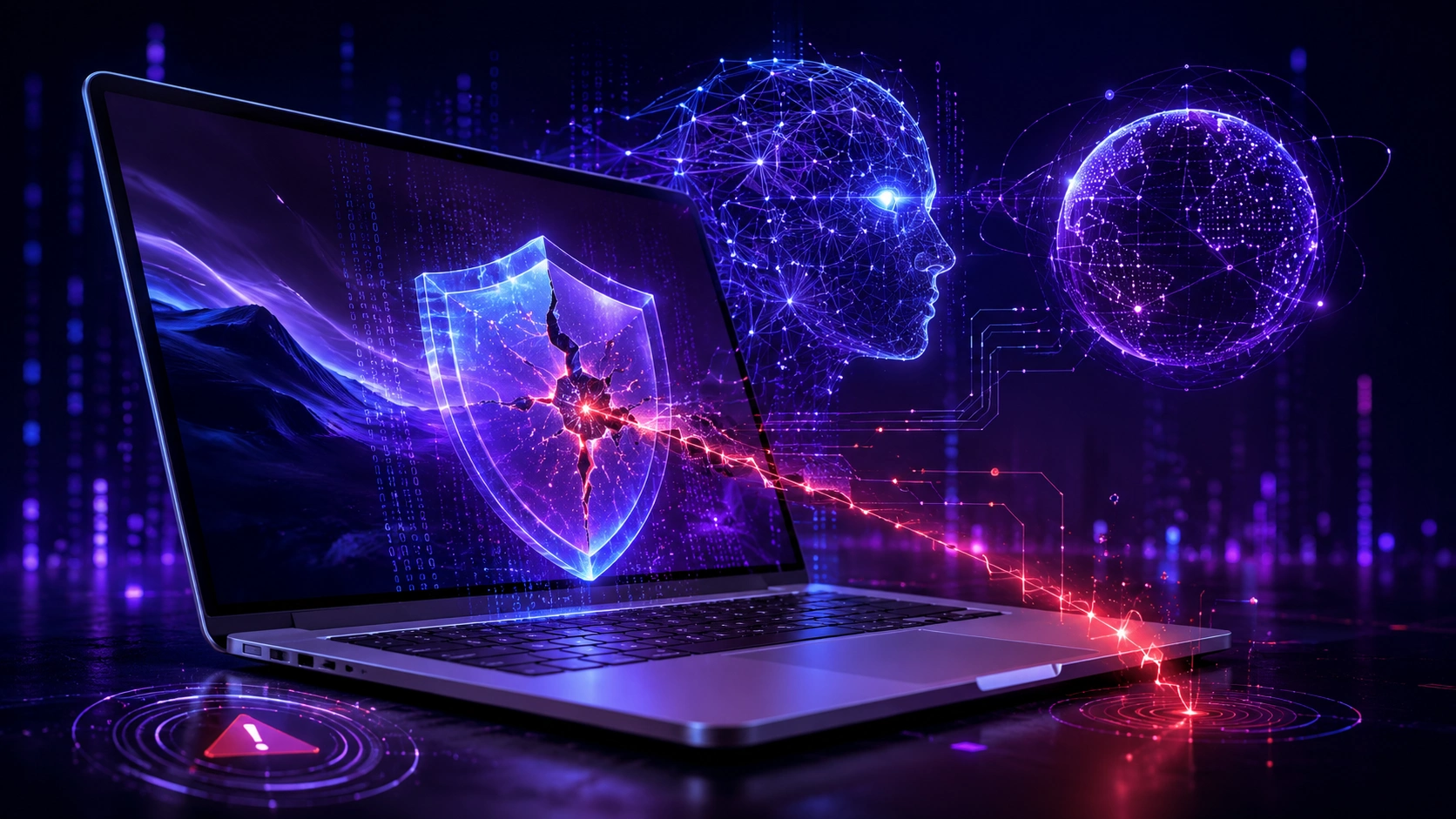
AI macOS security is suddenly one of the loudest conversations in cybersecurity because the latest Mythos-related discovery puts Apple’s desktop defenses under a sharper spotlight than usual. The story is not just about a single reported flaw, a single research team, or a single AI model helping humans move faster through complex code. It is about a new phase where advanced AI tools can help security researchers connect clues that used to take far longer to recognize. Apple has built macOS with layers of protection meant to make exploitation difficult, especially on modern Mac hardware, but this case shows that even highly defended systems can still face creative pressure. For readers who follow digital safety, software risk, and the future of offensive research, this moment feels like a preview of how cybersecurity may change over the next few years.
The reported discovery centers on Anthropic’s Mythos AI model being used in security testing that exposed a way to challenge Apple’s macOS protections. Researchers reportedly combined two software bugs and several techniques to reach areas of a Mac that should normally stay locked away from unauthorized access. That kind of vulnerability chain matters because modern exploitation rarely depends on one obvious mistake sitting alone in the codebase. Instead, attackers and defenders both look for small cracks that become dangerous when connected in the right order. That is why this AI macOS security case is more than another patch-cycle headline and deserves deeper attention from anyone building, using, or defending digital systems.
Why AI macOS Security Is Becoming a Bigger Deal
AI macOS security matters because Apple’s ecosystem has long carried a reputation for strong user protection, polished hardware-software integration, and a security model designed to frustrate attackers. Macs are not magically immune to cyber threats, but Apple’s architecture often forces attackers to work harder than they would on weaker or less controlled platforms. That reputation makes any serious macOS vulnerability research instantly important, especially when the research involves AI assistance. The Mythos angle adds another layer because it suggests that powerful AI systems may help humans search through complicated exploit paths with unusual speed. When those capabilities are pointed at one of the world’s most valuable computing platforms, the industry naturally pays attention.
The big shift is not that AI suddenly replaces elite security researchers, because this case still appears to rely heavily on human expertise, judgment, testing, and interpretation. The shift is that AI can act like a force multiplier for people who already understand exploitation, system internals, and vulnerability research. A skilled team can use a model to explore hypotheses, review code behavior, compare patterns, and move through technical dead ends faster than before. That creates a different tempo in vulnerability discovery, where defensive teams may face shorter windows between a flaw being found and a working exploit concept being formed. In practical terms, the clock starts ticking faster for vendors, enterprise security teams, and anyone responsible for patch management.
What Reportedly Happened With Mythos and macOS
The macOS research reportedly came from a Palo Alto-based security firm testing an early version of Anthropic’s Mythos AI system. During that work, researchers found a method that linked two bugs together and used memory corruption techniques to push beyond areas macOS normally protects. This does not mean every Mac user is instantly exposed to a public attack, because responsible disclosure usually keeps the technical details private until a patch is ready. It does mean Apple has to review the findings carefully, verify the exploit path, understand the affected components, and prepare a fix that does not break legitimate system behavior. That process is exactly why serious vulnerability reports can take time, especially when they touch deep operating system security.
The most interesting part is the reported role of Mythos in finding or shaping the path toward exploitation. A model like Mythos is not just a chatbot answering casual questions about malware or passwords. It appears to be positioned as a specialized AI system capable of assisting vulnerability discovery across complex software. In the macOS case, the model reportedly helped researchers identify techniques or directions that made the exploit chain easier to assemble. That does not make the model the sole author of the research, but it does make it part of the workflow, and that is enough to change how the security world talks about AI-assisted hacking.
The Real Concern Is Vulnerability Chaining
One isolated bug can be serious, but chained vulnerabilities are often where cybersecurity gets much more dangerous. Modern operating systems are built with layered defenses, meaning one barrier may fail while another still blocks the attacker from reaching meaningful control. That is why advanced exploits often connect multiple weaknesses into a sequence, moving from one small opening to a stronger position. In the reported macOS case, the chain involved memory corruption and privilege escalation concepts, which are especially sensitive because they can affect what an attacker is allowed to do on a device. This is the type of issue that makes security engineers slow down, reproduce every step, and treat the report with caution.
For everyday users, vulnerability chaining may sound abstract, but the idea is simple enough. Imagine a building with locked doors, cameras, guards, and badge readers, where one broken lock is annoying but not enough to reach the vault. A skilled intruder becomes dangerous when they know how to use the broken lock, avoid the camera, trick the badge reader, and reach a protected room in sequence. Software works in a similar way, except the doors are permissions, memory protections, sandbox rules, and kernel boundaries. AI-assisted research may make it easier to find the sequence that turns small weaknesses into a serious security story.
Apple’s Security Reputation Is Being Tested Again
Apple has spent years building trust around privacy, device security, and a tightly controlled ecosystem. Features like stronger memory protections, sandboxing, app review systems, and hardware-backed security all help reduce risk for users. Still, no operating system is perfect, especially when researchers study it with enough patience, creativity, and now AI support. The Mythos-related discovery does not erase Apple’s security work, but it does remind everyone that strong defenses are not the same thing as invincibility. In cybersecurity, a respected target attracts respected researchers, and sometimes those researchers find uncomfortable truths.
The good news is that responsible disclosure gives vendors a chance to fix issues before technical details become widely available. Apple’s review process matters because rushed patches can create new bugs, miss edge cases, or fail to close the full exploit chain. A company of Apple’s scale also has to think across different chip generations, macOS versions, enterprise environments, developer tools, and user configurations. That makes the patching process more complex than simply flipping a switch and moving on. For Mac users, the practical advice remains clear: stay alert for security updates, install them quickly, and avoid treating brand reputation as a replacement for basic cyber hygiene.
How Mythos Changes the Security Research Workflow
Mythos is important because it represents a broader trend: AI systems are moving from passive assistants into active research partners. Traditional vulnerability research requires reverse engineering, code review, fuzzing, exploit development, documentation reading, crash analysis, and a lot of slow pattern recognition. AI can help compress parts of that process by suggesting angles, summarizing technical behavior, generating test ideas, and connecting known exploitation patterns to new environments. The model may not invent a fully original attack from nothing, but it can still help an expert move faster through the maze. That speed is what makes the industry both excited and nervous.
There is a major difference between an AI model helping a beginner copy dangerous instructions and an AI model helping an expert navigate system-level research. The second scenario is more subtle, more powerful, and harder to regulate with simple content filters. A capable researcher does not need the model to explain every basic step, because they already understand the technical landscape. What they need is acceleration, alternative hypotheses, and help finding paths they might have missed. That is why advanced AI security models may become one of the most important tools in both defensive labs and offensive research environments.
The Trend: AI Is Turning Bug Hunting Into a Race
The bigger cybersecurity trend is that bug hunting is becoming faster, more automated, and more competitive. Security teams already use scanners, fuzzers, static analysis tools, symbolic execution, and threat intelligence platforms to find weaknesses before attackers do. AI adds another layer that can interpret messy signals and suggest meaningful next steps. That means defenders may discover more flaws, but attackers may also gain similar acceleration when they have access to strong models or custom tools. The result is a race where discovery speed, patch speed, and deployment speed all matter more than they did before.
This race will likely reshape how companies think about secure software development. It is no longer enough to ship code, run a few checks, and wait for outside reports. Organizations will need deeper testing pipelines, better dependency visibility, stronger red-team programs, and faster security engineering loops. They will also need policies for how internal teams use AI safely during research, because powerful tools can create sensitive outputs even when the intent is defensive. For readers who follow cybersecurity, this shift may become one of the defining stories of the next era of digital risk.
Why Enterprises Should Pay Attention
Enterprises should care about this story even if they do not manage Apple’s codebase or develop operating systems. Many companies rely on Macs for executives, developers, designers, engineers, finance teams, and remote workers. A serious macOS vulnerability can affect identity systems, source code access, cloud credentials, communication platforms, and sensitive business documents. Even when a bug is not publicly exploited, the report is a reminder that endpoint security cannot be passive. Companies need layered controls because one missed patch or one overprivileged account can turn a device issue into an organizational problem.
The best enterprise response is not panic, but preparation. Security leaders should review patch management timelines, device inventory accuracy, endpoint detection coverage, and how quickly critical updates reach managed Macs. They should also check whether users have unnecessary admin privileges, because privilege escalation risks become worse when permissions are already loose. Developer machines deserve extra attention because they often contain credentials, source repositories, local secrets, and access to production-adjacent systems. A Mac may look like a polished personal device, but inside a company it can be a high-value doorway.
What Regular Mac Users Should Do Now
Regular Mac users do not need to overreact, but they should treat this as a reminder to keep their security basics tight. The most important step is to install macOS security updates as soon as Apple releases them, especially when those updates mention active research or exploited vulnerabilities. Users should also avoid downloading unknown apps, cracked software, suspicious browser extensions, and random installers from untrusted sites. Many real-world attacks still depend on social engineering, weak passwords, phishing, or users granting permissions they do not fully understand. Strong system security helps, but human decisions still shape the final risk.
It is also smart to review privacy and permission settings on a Mac every once in a while. Apps that no longer need full disk access, accessibility control, screen recording, camera access, or microphone access should not keep those permissions forever. Users should enable automatic updates where appropriate, use strong unique passwords, turn on multi-factor authentication, and keep browser profiles clean. Backups also matter because ransomware and destructive malware are easier to recover from when important files are stored safely. None of these steps are flashy, but they reduce damage when sophisticated research eventually becomes real-world attack pressure.
The Bigger AI Risk Is Not Just One Model
The Mythos story is not only about Anthropic, Apple, or one macOS exploit chain. The bigger issue is that AI-assisted vulnerability discovery is becoming a capability class, not a single product feature. Once a workflow proves useful, other labs, vendors, governments, startups, and attackers will try to build similar systems. Some will be responsibly controlled, tested, and limited to trusted partners. Others may be less careful, especially if open-source scaffolds and smaller models become good enough to assist real bug hunting.
This is where the security conversation becomes complicated. AI can help defenders find bugs before criminals do, which is a massive benefit for software safety. At the same time, the same style of capability can help hostile actors scale discovery, automate testing, and lower the skill barrier for certain exploit paths. The answer cannot be to ignore AI or pretend the capability will disappear. The more realistic answer is to build stronger disclosure systems, better testing standards, smarter model access controls, and faster defensive coordination across the software industry.
Why This Could Change Patch Culture
Patch culture may be one of the first areas transformed by AI-driven security research. In the past, many organizations treated patching as a scheduled maintenance task that could wait for convenient windows. That mindset becomes risky when vulnerability discovery accelerates and exploit development cycles shrink. Companies may need to classify AI-assisted discoveries with higher urgency, especially when they involve privilege escalation, memory corruption, authentication bypass, or sandbox escape techniques. The slower a business patches, the longer it leaves a known pathway open for someone else to study.
This does not mean every update should be installed blindly without testing, because enterprise environments still need stability. It does mean organizations should improve how they separate routine updates from high-risk security patches. A better process might include rapid testing rings, prioritized deployment for high-value users, emergency communications, and clear rollback plans. Security teams should also measure patch completion, not just patch availability, because a released fix does not protect devices that never receive it. In the AI-assisted vulnerability era, patch speed becomes part of brand trust, business continuity, and operational resilience.
Practical Lessons for Developers and Security Teams
Developers and security teams can take several useful lessons from this AI macOS security moment. First, complex systems need layered review because one defensive feature cannot carry the entire burden alone. Second, memory safety still matters deeply, especially when attackers can combine old patterns with new discovery tools. Third, AI-assisted testing should be treated as part of the modern security toolkit rather than a futuristic experiment. Fourth, responsible disclosure programs need enough speed and clarity to handle higher volumes of sophisticated findings.
Security teams should also start building internal guidance for AI use in vulnerability research. That guidance should define which models can be used, what data can be entered, how findings are stored, and who reviews potentially sensitive outputs. Teams should avoid feeding private source code or exploit details into tools without understanding data handling rules. They should also document when AI contributed to a finding so the organization can learn which workflows actually improve results. The goal is not to ban powerful tools, but to use them with the same discipline expected from any serious security process.
Where Apple Goes From Here
Apple’s likely path is careful validation, patch development, and controlled communication once the issue is addressed. The company has to understand whether the reported chain affects current macOS versions, specific hardware generations, certain configurations, or broader components. It also has to make sure the fix closes the route without creating compatibility problems or weakening other protections. This kind of engineering is rarely as simple as changing one line of code and calling the job done. Deep security fixes often require patience because the defense must survive future attempts, not just the original report.
For the broader market, Apple’s response will also signal how major vendors handle AI-assisted vulnerability reports. If AI tools generate more discoveries, vendors may need more capacity to review complex submissions from trusted researchers. Bug bounty programs may evolve to clarify how AI-assisted findings should be reported, rewarded, and validated. Security teams inside major tech companies may also adopt similar models defensively to search their own products before outsiders do. In that sense, the Mythos macOS case may become less of an isolated event and more of an early marker for a new operating reality.
Conclusion: AI macOS Security Is the New Warning Signal
AI macOS security is now a serious warning signal for the entire cybersecurity world because it shows how quickly advanced tools can reshape vulnerability discovery. The reported Mythos-assisted macOS research does not mean Apple’s platform is broken, and it does not mean every Mac user should panic. It means the balance between attackers and defenders is shifting toward speed, automation, and more advanced research workflows. Apple’s challenge is to patch carefully, communicate clearly, and keep strengthening protections against the next generation of AI-assisted testing. For users, businesses, and developers, the smartest move is simple: update faster, reduce unnecessary risk, and treat AI-driven security research as the new normal rather than a distant future.