

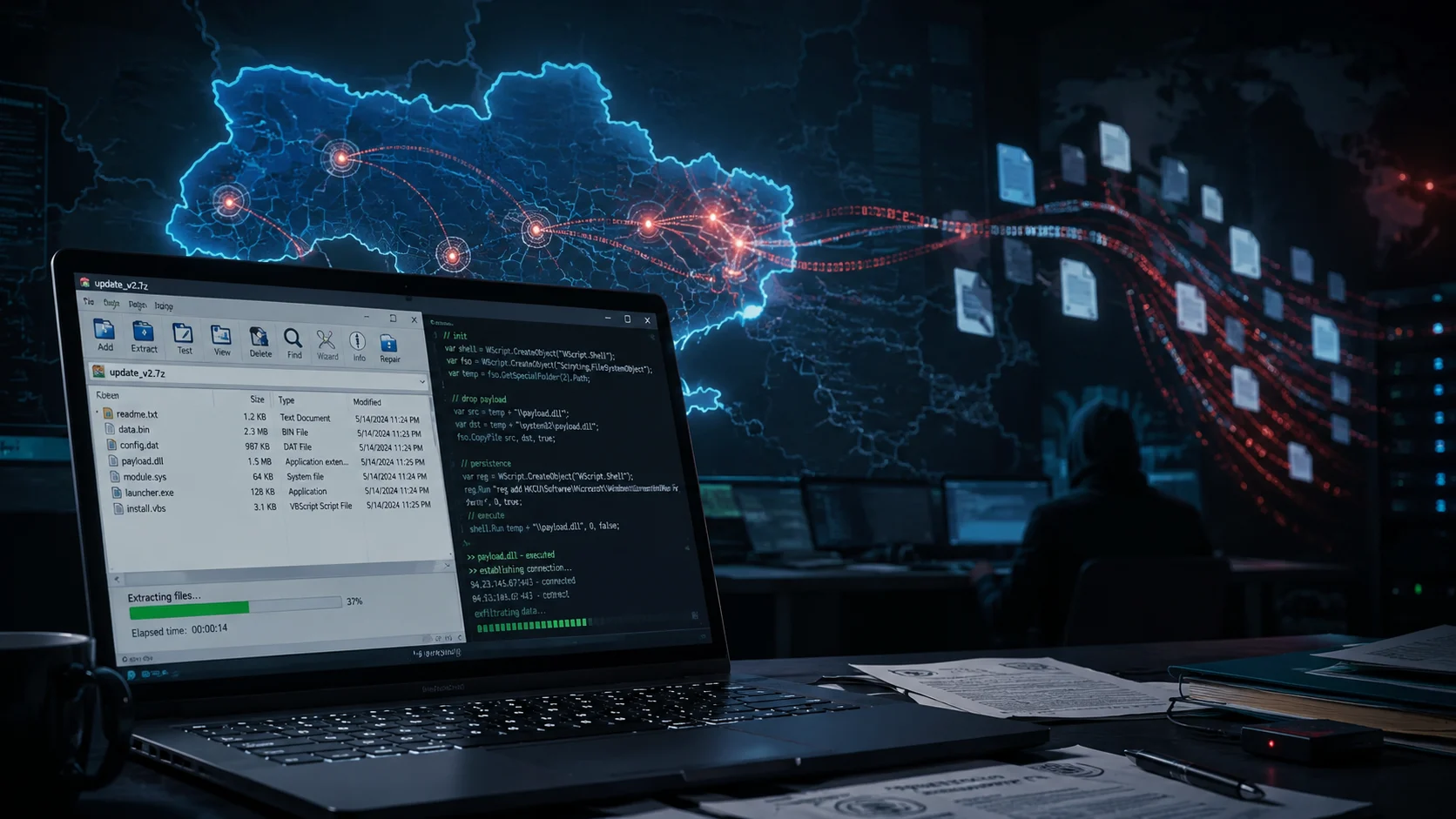
The Gamaredon WinRAR exploit story feels like another reminder that modern cyberwar does not always begin with a dramatic breach screen or a flashy ransomware note. Sometimes, it begins with a familiar archive file, a routine click, and a tool millions of Windows users have treated as harmless for years. In Ukraine’s ongoing digital battlefield, Gamaredon has turned that familiarity into a weapon, using a WinRAR vulnerability as part of a broader espionage chain designed to spread malware, maintain access, and steal sensitive data. The operation matters because it shows how old habits, delayed patching, and trusted file formats can become open doors for state-linked attackers. For defenders, this is not just a Ukraine-focused incident; it is a warning about how quickly everyday software can become the first step in a serious national security breach.
Why the Gamaredon WinRAR Exploit Matters Now
Gamaredon has long been known for targeting Ukrainian government, military, and public-sector environments, but this latest activity stands out because of the way it blends simple delivery with layered persistence. The group is not relying on one loud malware strain or a single smash-and-grab tactic. Instead, it appears to be using a staged infection chain where a malicious archive can lead to GammaPhish, GammaLoad, GammaWorm, and GammaSteel components. That structure gives attackers flexibility because one stage can handle delivery, another can profile the machine, another can spread, and another can focus on stealing files. The result is a campaign that looks less like a single tool and more like a modular espionage system built for long-term access.
The reason WinRAR is such an attractive target is painfully simple: it is everywhere, especially on Windows systems that have been running the same utilities for years. Many users do not think of file archivers as high-risk software because they are not browsers, operating systems, or security tools. That assumption creates a dangerous blind spot, especially when a vulnerability allows malicious content to land outside the folder where a user thinks it is being extracted. If a payload reaches a startup location or another sensitive path, the attacker can gain execution without needing the victim to understand what just happened. In a high-pressure environment like Ukraine, where staff may handle documents quickly across agencies and partners, that kind of trick becomes even more dangerous.
Inside the Attack Chain Behind the Campaign
The campaign reportedly starts with crafted archive files that abuse a WinRAR path traversal vulnerability, allowing the attackers to place malicious components where they should not normally go. Once the archive is opened or extracted under the wrong conditions, the chain can move into scripts and payloads designed to continue the intrusion. GammaPhish functions as an early-stage component, helping the attack move from a lure into a working foothold. GammaLoad then operates as an intermediate downloader, pulling additional code and preparing the compromised system for later tasks. This layered design matters because each stage can be replaced, updated, or adjusted without forcing the entire operation to change.
GammaWorm is especially concerning because its role is not limited to one infected machine. Worm-like behavior gives an attacker the possibility of spreading through removable drives, shared locations, or connected environments where users exchange files frequently. That makes the campaign more resilient because it does not depend only on the first phishing email or first malicious archive. If one compromised machine can help the infection reach others, defenders are forced to investigate not only the original endpoint but also the surrounding network and file-sharing activity. In an organization with many moving parts, that can turn a small incident into a much wider containment problem.
GammaSteel adds another layer of risk because data theft is the real prize in espionage operations. A stealer does not need to destroy a system to cause damage, and that makes it quieter than ransomware or destructive wipers. It can search for documents, collect files, and send valuable information back to attacker-controlled infrastructure while the victim keeps working as if nothing is wrong. For Ukrainian institutions, that could mean exposure of operational plans, communications, identity records, logistics files, or sensitive internal reports. In cyberespionage, the biggest damage is often discovered late, after the attacker has already copied what they came for.
Gamaredon’s Playbook Is Built for Persistence
Gamaredon’s strength has never been about being the quietest or most elegant actor in the room. The group is often associated with aggressive volume, repeated targeting, and constant adaptation rather than one perfectly hidden intrusion. That makes the group difficult to dismiss because even noisy campaigns can succeed when they are persistent enough. If defenders block one lure, another arrives; if one infrastructure node goes down, another may appear; if one script is detected, a slightly changed version can follow. This grind-based approach is one reason Gamaredon remains relevant in the Ukraine-focused threat landscape.
The Gamaredon WinRAR exploit also reflects a broader trend where attackers weaponize known vulnerabilities long after fixes are available. In many organizations, patching third-party utilities is slower than patching core operating systems. Security teams may have clear workflows for Windows updates, browser updates, and endpoint protection updates, but utilities like WinRAR can sit outside that rhythm. That gap creates an opportunity for attackers because an old vulnerable copy of a trusted app can become just as dangerous as an unpatched server. The lesson is direct: software inventory is no longer a boring compliance task; it is frontline defense.
Why Archive Files Still Work as Attack Bait
Archive files remain useful to attackers because they fit naturally into everyday work. People receive compressed folders for reports, legal files, images, contracts, databases, and technical documents. In government or enterprise environments, archives are especially normal because large collections of files often need to be moved quickly. That normality lowers suspicion, and attackers know it. When a threat actor can hide malicious logic inside something that looks like routine paperwork, the social engineering burden becomes much lighter.
Another reason archive-based attacks keep working is that they blur the line between file handling and code execution. A user may think they are simply unpacking files, not launching anything dangerous. However, when a vulnerability allows files to be written into unexpected locations, the act of extraction can become part of the execution path. This is exactly why path traversal issues are so serious in real-world attacks. They turn a basic file operation into a security boundary failure, and most users will not notice until security tools begin raising alerts.
Ukraine as a Testing Ground for Cyber Tactics
Ukraine has become one of the most heavily targeted cyber environments in the world, and that pressure has changed how researchers and defenders view modern conflict. Cyberattacks against Ukrainian institutions often mix espionage, disruption, psychological pressure, and intelligence collection. Gamaredon’s activity fits into that pattern because stealing documents can support broader strategic goals without needing to cause visible outages. Information can reveal planning cycles, contacts, procurement details, emergency procedures, and internal weaknesses. In a conflict environment, that kind of intelligence can be just as valuable as direct sabotage.
The campaign also shows how cyber operations can stay active even when global attention moves elsewhere. Headlines often focus on massive breaches, ransomware gangs, or AI-powered scams, but state-linked espionage groups keep working in the background. Their campaigns are not always designed to shock the public. They are designed to gather, persist, and return. That slower rhythm makes them harder to track from the outside, but it also makes them more dangerous for organizations that assume no visible crisis means no active compromise.
The Bigger Trend: N-Day Exploits Are Winning
One of the most important lessons from the Gamaredon WinRAR exploit is that attackers do not always need fresh zero-days to cause serious damage. An n-day vulnerability, meaning a flaw that is already known and patched, can still be powerful if enough users remain exposed. This is a major problem across enterprise security because patch availability and patch deployment are two very different things. A vendor can release a fix, researchers can publish details, and security teams can issue alerts, but none of that matters if vulnerable software stays installed. Attackers understand this delay and often build campaigns around it.
This trend should worry small businesses, government offices, schools, hospitals, and large enterprises alike. The software most likely to be forgotten is often the software people installed years ago and stopped thinking about. File archivers, PDF tools, remote access utilities, media players, legacy plugins, and niche productivity apps can all become weak points. The risk grows when those apps do not update automatically or when users need admin approval to install the latest version. In that environment, attackers do not need to break the newest defense; they only need to find the oldest neglected tool.
Impact on Enterprise and Government Security
For enterprise defenders, this campaign pushes a clear message: endpoint security has to include the entire software ecosystem, not just the operating system. A workstation with a fully updated Windows build can still be exposed if a vulnerable third-party application remains installed. That reality complicates security because organizations need accurate asset visibility across thousands of machines, not just a patch dashboard for major vendors. It also means procurement and IT teams must think harder about which utilities are approved, how they are updated, and whether they are still necessary. Convenience tools can quietly become enterprise risk when nobody owns their lifecycle.
Government agencies face an even sharper version of this problem because their users often handle sensitive documents from many sources. A malicious archive can arrive as a fake report, a policy attachment, a meeting brief, or a shared operational file. If staff are under pressure, even well-trained users can make mistakes. Security teams cannot rely only on awareness training to stop every dangerous file. They need technical controls that inspect archives, block suspicious extraction behavior, restrict startup folder abuse, and detect unusual script execution before the attacker reaches the data theft stage.
Practical Defense Lessons from the Campaign
The first practical lesson is to update WinRAR and verify that old versions are not hiding across the environment. This sounds basic, but basic controls often decide whether an attack chain works or fails. Security teams should not assume that users update utilities manually, especially when those utilities have been installed for years. A proper inventory should identify outdated versions, unmanaged installs, portable copies, and systems where users have local software outside standard deployment tools. Once that picture is clear, updating becomes a measurable security task instead of a vague recommendation.
The second lesson is to treat script activity around archive extraction as suspicious when the context does not make sense. If opening a compressed file suddenly leads to VBScript execution, startup folder changes, or unusual outbound connections, defenders should investigate fast. Endpoint detection rules should focus on behavior, not just known file hashes, because modular malware can change quickly. Network teams should also monitor strange connections to newly created or low-reputation infrastructure. The goal is not to catch only one named malware family; the goal is to catch the pattern that makes the intrusion work.
Security Controls That Actually Help
Organizations should combine patching with application control, endpoint detection, attachment scanning, and least-privilege policies. Application control can limit which scripts are allowed to run and which folders can execute code. Least privilege reduces the chance that a user action can modify sensitive locations without resistance. Attachment scanning helps detect suspicious archives before they reach the endpoint. None of these controls is perfect alone, but together they create friction that forces attackers to work harder and creates more chances for defenders to spot the intrusion.
- Patch management: Track WinRAR and other third-party tools with the same seriousness as operating system updates.
- Archive inspection: Scan compressed files before delivery and after extraction, especially in high-risk departments.
- Script restrictions: Limit unnecessary VBScript, PowerShell, and startup-folder execution across user endpoints.
- Endpoint telemetry: Watch for unusual file writes, persistence attempts, and unexpected outbound connections.
- User reporting: Make suspicious archive reporting simple, fast, and free from blame so employees speak up early.
These controls are especially important for organizations that share documents with external partners. A single trusted relationship can become a delivery channel when attackers impersonate a known contact or compromise a legitimate account. That is why security teams should not treat archive files as safe just because they came from a familiar sender. Context matters, but behavior matters more. If the file does something strange, the sender name should not be enough to clear it.
The Malware Category Is Evolving Fast
The campaign belongs naturally in the Malware conversation, but it also touches vulnerability management, enterprise security, and digital crime. Modern malware operations are becoming more modular because attackers want flexibility. A phishing component, a loader, a worm, and a stealer can each do a specific job while supporting the same campaign. This makes detection harder because defenders may see only one piece at a time. It also makes attribution and response more complicated because the full operation may only become clear after multiple artifacts are connected.
That modular approach is not unique to Gamaredon, but this case shows why it works so well in espionage. A modular toolkit can survive partial disruption because losing one server, one script, or one payload does not necessarily end the campaign. Attackers can refresh infrastructure, rotate payloads, and keep the same overall strategy alive. Defenders need to respond with the same layered thinking. Blocking one file is useful, but understanding the campaign logic is what prevents the next version from succeeding.
What This Means for Smaller Organizations
Small and mid-sized organizations should not assume this type of threat is only relevant to governments or military networks. State-linked tactics often move into the wider threat ecosystem because criminals learn from public reporting, leaked tools, and repeated techniques. A WinRAR exploit chain that works against a high-value target can inspire copycat campaigns against businesses, nonprofits, contractors, or suppliers. Smaller organizations may also be targeted indirectly if they support larger institutions. In many supply-chain attacks, the easiest way into a hardened target is through a less protected partner.
The defense strategy for smaller teams should focus on realistic wins. Keep software updated, remove tools that are no longer needed, restrict script execution, and use reputable endpoint protection. Train staff to be careful with unexpected archives, but do not make training the only defense. Backups, logging, and incident response plans matter because prevention will never be perfect. A small team that can detect, isolate, and recover quickly is in a much stronger position than one that simply hopes users never click the wrong file.
The Human Factor Behind the Technical Story
It is easy to describe this campaign through malware names and vulnerability IDs, but the human side is just as important. Attackers are counting on people being busy, distracted, and familiar with archive files. They are counting on IT teams being overloaded and patch queues being messy. They are counting on old software remaining invisible until something breaks. That is what makes the campaign feel realistic rather than exotic: it abuses ordinary work habits instead of relying only on rare technical conditions.
Good security culture does not mean expecting every employee to become a malware analyst. It means designing systems where one mistake does not automatically become a full compromise. Employees should know how to report suspicious files, but security tools should also catch risky behavior after a file is opened. IT should patch software, but procurement should also reduce unnecessary tool sprawl. Cybersecurity works best when responsibility is shared across technology, process, and leadership instead of pushed onto the last person who clicked.
Conclusion: A Familiar Tool Became a Cyber Weapon
The Gamaredon WinRAR exploit is a sharp reminder that cyberespionage often grows from familiar tools, old vulnerabilities, and overlooked routines. Gamaredon’s use of archive-based delivery, staged malware, worm-like spreading, and data-stealing payloads shows how persistent threat actors adapt common software into serious operational weapons. For Ukraine, the campaign is part of a larger digital conflict where stolen information can carry strategic consequences. For everyone else, it is a warning that patch delays and forgotten utilities can open the same kind of door in any environment. The best response is not panic; it is disciplined software inventory, fast patching, behavior-based detection, and a security culture that treats everyday files with the caution they now deserve.